Diabetes Can Affect Your Eyes Silently
Diabetes Can Affect Your Eyes Silently
Diabetic eye damage can develop for years without pain, blurred vision, or obvious warning signs. That is why regular diabetic eye screening is important even when your eyesight feels completely normal. Early retinal changes can often be detected and treated before they threaten your vision.
What Does Diabetes Do to the Eyes?
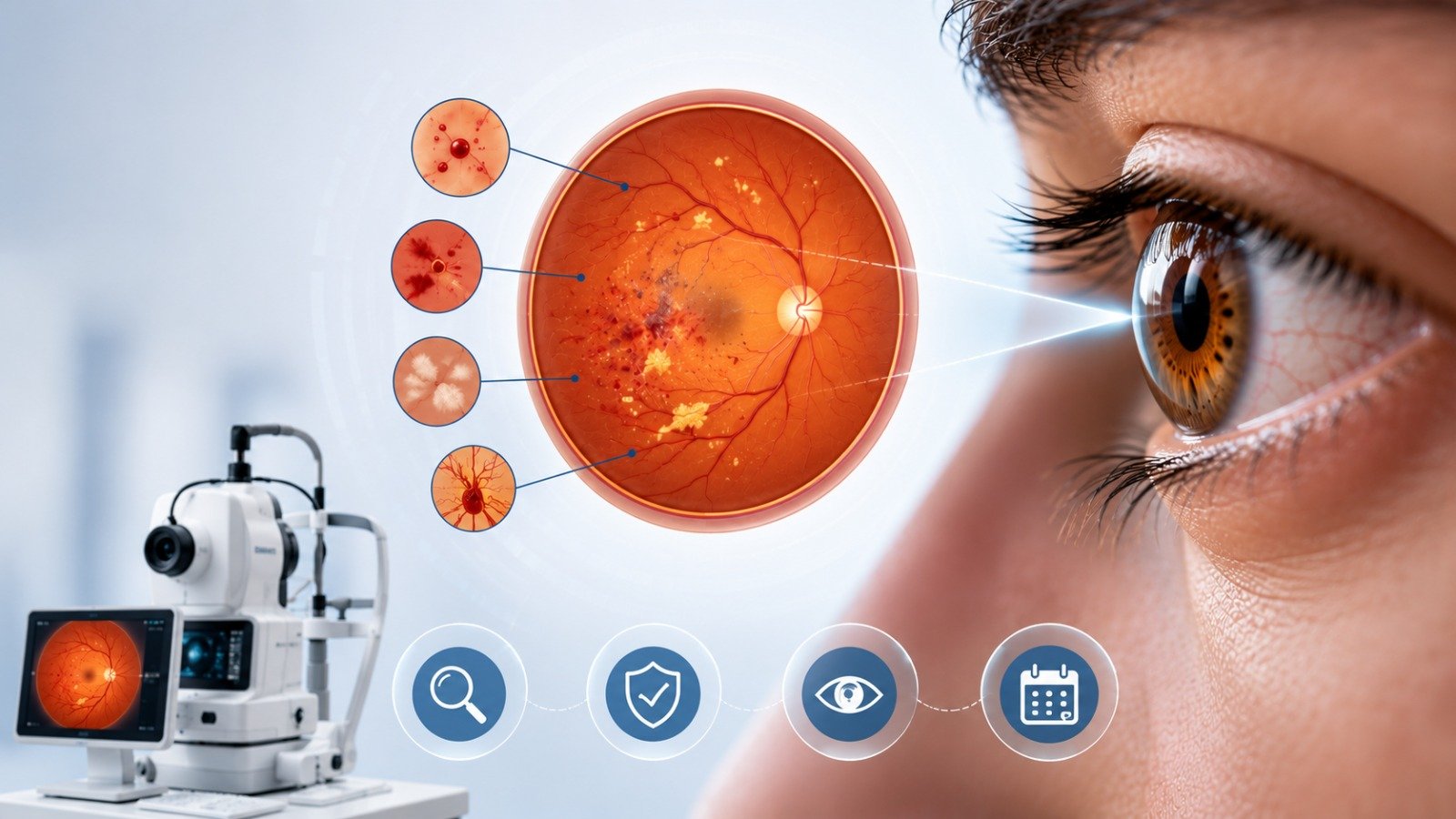
Diabetes can damage the tiny blood vessels in the retina—the light-sensitive tissue at the back of the eye that sends visual information to the brain. This condition is called diabetic retinopathy.
When blood glucose remains high over time, retinal blood vessels can become damaged. They may leak fluid, become blocked, or develop fragile abnormal blood vessels. Diabetes can also cause fluid to accumulate in the macula, the part of the retina responsible for sharp central vision. This is known as diabetic macular edema.
The important point is that early diabetic retinopathy often causes no symptoms. Vision problems may appear only after the disease has progressed.
Why Can Diabetic Eye Damage Be Missed?
You may be able to read, drive, work on a computer, and use your phone normally while early retinal damage is already developing.
| What You May Feel | What May Be Happening |
|---|---|
| No symptoms | Early retinal blood-vessel changes may already be present. |
| Normal eyesight | The retina can still have damage before central vision is affected. |
| Sudden visual symptoms | Disease may have progressed or another urgent eye problem may be present. |
A routine glasses or vision check is not necessarily the same as a diabetic retinal examination. Diabetes screening specifically looks at the back of the eye for retinal disease.
What Is a Diabetic Eye Screening Exam?
Depending on the setting, diabetic retinal screening may involve dilating the pupils with eye drops so the clinician can examine the retina. Retinal photography may also be used to capture detailed images of the back of the eye.
These examinations can identify retinal changes before you notice changes in your eyesight. If abnormalities are detected, you may be referred to an ophthalmologist or retina specialist for further evaluation and treatment.
Who Needs a Diabetic Eye Exam?
Everyone with diabetes needs appropriate retinal screening, whether or not they currently have vision problems. The timing depends on the type of diabetes, duration of disease, pregnancy status, and previous retinal findings.
| Type of Diabetes | When Screening Usually Starts | Typical Follow-Up |
|---|---|---|
| Type 1 Diabetes | Generally within 5 years of diagnosis. | Usually annually, depending on findings. |
| Type 2 Diabetes | At the time of diagnosis. | Often annually; longer intervals may be appropriate when repeated examinations are normal and your clinician recommends them. |
| Gestational Diabetes | Routine diabetic retinopathy screening is generally not required for gestational diabetes alone. | Follow your clinician's advice, especially if you had diabetes before pregnancy. |
Important: These are general intervals. Your ophthalmologist may recommend more frequent examinations if retinopathy is present, blood glucose or blood pressure is poorly controlled, or other risk factors exist.
Who Has a Higher Risk of Diabetic Eye Damage?
The risk of diabetic retinopathy generally increases as diabetes continues for longer and when other factors that damage blood vessels are not well controlled.
- Longer duration of diabetes.
- Frequently elevated blood glucose.
- High blood pressure.
- High cholesterol or triglycerides.
- Kidney disease.
- Pregnancy in someone with pre-existing diabetes.
Good diabetes control can reduce the risk of complications, but good blood sugar control does not eliminate the need for regular retinal screening.
How Can You Protect Your Vision?
The best protection combines early detection with control of the factors that damage small blood vessels.
- Keep blood glucose within the target agreed upon with your diabetes clinician.
- Monitor and manage blood pressure.
- Keep cholesterol and triglycerides under appropriate control.
- Take prescribed diabetes medicines consistently.
- Do not smoke.
- Attend your scheduled retinal screening even when your vision is excellent.
- Follow up promptly if your eye doctor recommends additional testing or treatment.
What Happens If Retinopathy Is Found?
Not every person with diabetic retinopathy needs immediate treatment. Management depends on the type and severity of retinal disease.
When diabetic eye disease becomes vision-threatening, treatment may include:
- Anti-VEGF injections to reduce abnormal blood-vessel growth or retinal swelling.
- Laser treatment in selected cases.
- Eye surgery for advanced complications such as severe bleeding or retinal problems.
The earlier significant retinal disease is identified, the sooner appropriate treatment can be considered.
Do Not Wait for Symptoms
| You May Think | The Reality |
|---|---|
| "My vision is perfect." | Early diabetic retinopathy may still be present without symptoms. |
| "I only need glasses checked." | A diabetic retinal examination specifically evaluates the retina for diabetes-related damage. |
| "I'll go when my eyesight changes." | Waiting for symptoms can mean missing the opportunity to detect disease early. |
When Should You Seek Urgent Eye Care?
Do not wait for your next routine screening appointment if you develop sudden or significant changes in vision.
- Sudden vision loss.
- A sudden increase in floaters.
- Flashes of light.
- A curtain or dark shadow across your vision.
- New severe distortion or blurring.
These symptoms can indicate a serious eye problem and require urgent medical assessment.
Quick Eye-Protection Checklist
| Do | Don't |
|---|---|
|
✔ Get regular retinal screening ✔ Control blood glucose ✔ Manage blood pressure ✔ Manage cholesterol ✔ Take prescribed medicines ✔ Attend eye follow-ups |
✘ Wait for blurred vision ✘ Skip retinal screening ✘ Ignore sudden floaters or flashes ✘ Ignore sudden vision loss ✘ Stop prescribed treatment without medical advice |
Bottom Line
Diabetes can damage your eyes silently. Diabetic retinopathy can develop long before you notice blurred vision or other symptoms, which is why regular retinal screening is essential even when your eyesight feels completely normal. Good blood glucose, blood pressure, and cholesterol control can reduce risk, but they do not replace eye examinations. If retinal disease is detected, timely treatment can help protect vision. Do not wait for your eyesight to change before getting your diabetic eye check.
Need Expert Endocrine Care?
Book a consultation with our specialist endocrinologists at Shashi Advanced Health Clinics, Bangalore.
Book Appointment on WhatsApp