
Perimenopause Symptoms Women Often Dismiss
Perimenopause Symptoms Women Often Dismiss
Perimenopause is the transition period before menopause, often beginning in a woman's 40s and lasting several years before periods stop completely. During this time, hormone levels fluctuate, leading to a wide range of symptoms that are frequently mistaken for stress, aging, or a hectic lifestyle. Recognizing these early signs can help women seek appropriate care and improve their quality of life.
What is Perimenopause?
Perimenopause is the natural transition leading up to menopause. During this phase, the ovaries gradually produce less estrogen, causing changes in menstrual cycles and affecting many parts of the body. Symptoms may appear several years before the final menstrual period and can vary widely from one woman to another.
Because these changes happen gradually, many women do not immediately recognize that hormones are responsible for what they are experiencing.
Common Symptoms Women Often Overlook
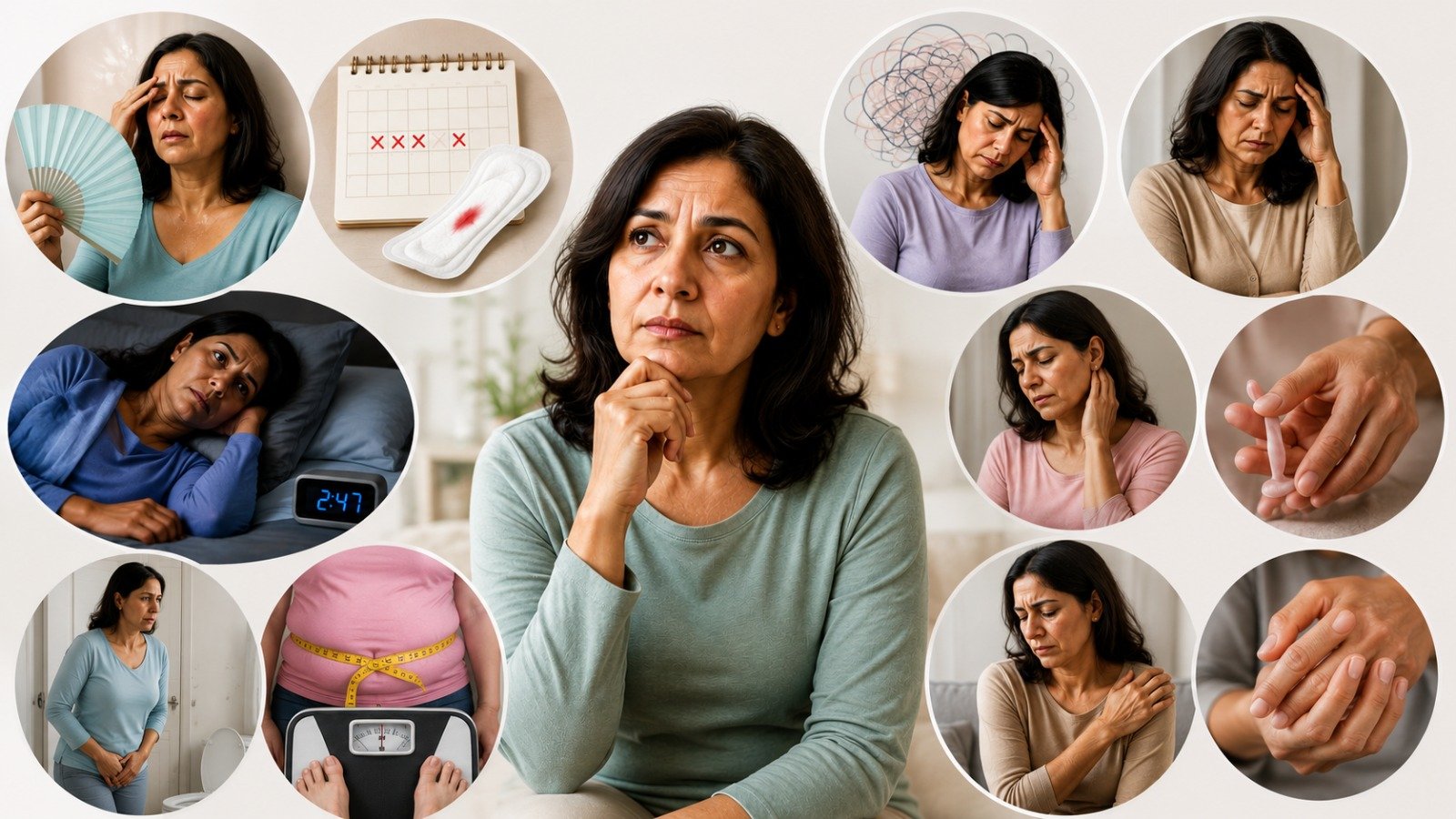
| Symptom | How It May Feel |
|---|---|
| Night Sweats | Waking up hot or sweating even when the room feels cool. |
| Irregular Periods | Shorter or longer cycles, skipped periods, heavier bleeding, or unpredictable flow. |
| Brain Fog | Difficulty concentrating, forgetfulness, or trouble finding words. |
| Mood Changes | Irritability, anxiety, emotional sensitivity, or low mood. |
| Sleep Problems | Difficulty falling asleep, frequent waking, or poor-quality sleep. |
| Vaginal Dryness | Dryness, irritation, or discomfort during intimacy. |
| Urinary Symptoms | Frequent urination, urgency, or repeated urinary tract infections. |
| Weight Changes | Increase in abdominal fat or changes in body shape despite similar eating habits. |
| Joint & Muscle Aches | Persistent stiffness or body aches often mistaken for aging. |
Why Are These Symptoms Often Missed?
Many symptoms of perimenopause resemble everyday problems such as stress, lack of sleep, anxiety, or the natural aging process. Because there is no single blood test that confirms perimenopause, diagnosis is based mainly on symptoms, menstrual changes, and age.
As a result, many women spend months or even years treating individual symptoms without realizing they are all connected to hormonal changes.
When Should You Pay Attention?
Consider discussing perimenopause with your doctor if you are in your 40s or early 50s and notice several of these symptoms occurring together, especially:
- Irregular menstrual cycles
- Hot flashes or night sweats
- Poor sleep
- Brain fog or memory changes
- Mood swings or increased anxiety
- Vaginal dryness
- Urinary urgency or frequent urinary infections
If these symptoms are affecting your work, relationships, sleep, or daily activities, they deserve medical evaluation rather than being dismissed as "just stress."
What Can You Do?
- Keep a monthly record of your menstrual cycle.
- Track symptoms such as hot flashes, sleep quality, mood, and urinary changes.
- Maintain regular physical activity and a balanced diet.
- Get adequate calcium, vitamin D, and protein for bone health.
- Practice good sleep habits and stress management.
- Discuss persistent symptoms with a healthcare professional.
A simple symptom diary can help identify patterns and make it easier for your doctor to determine whether perimenopause is the likely cause.
Key Takeaways
- Perimenopause often begins several years before menopause.
- Symptoms may appear gradually and are frequently mistaken for stress or aging.
- Irregular periods, sleep problems, brain fog, mood changes, and hot flashes often occur together.
- Keeping a symptom diary can help identify hormonal patterns.
- Early recognition allows women to receive appropriate advice and symptom management.
Bottom Line
Perimenopause often starts quietly, and many women dismiss its early signs as part of a busy life or normal aging. Symptoms such as irregular periods, poor sleep, brain fog, mood changes, night sweats, vaginal dryness, urinary symptoms, and changes in body shape frequently occur together. Recognizing these patterns early and seeking medical advice can improve symptom control, support long-term health, and make the transition to menopause much easier.
Need Expert Endocrine Care?
Book a consultation with our specialist endocrinologists at Shashi Advanced Health Clinics, Bangalore.
Book Appointment on WhatsApp