
The Oil Aisle Just Got a Lot Less Confusing: Your Guide to Choosing the Right Cooking Oil
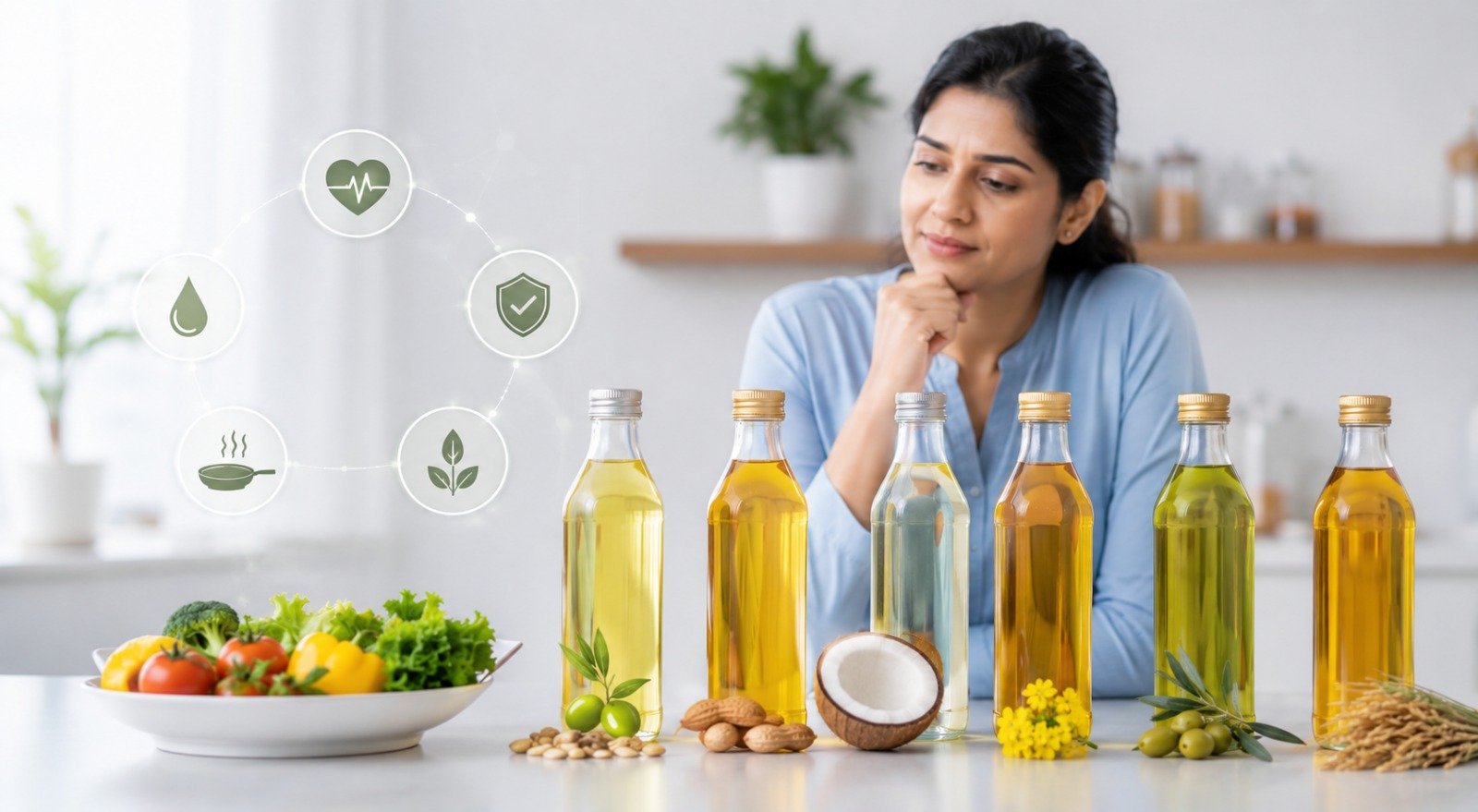
The Oil Aisle Just Got Simpler
An Evidence-Based Guide to Choosing the Right Cooking Oil for Better Heart Health, Diabetes Prevention, and Long-Term Wellness
Why Your Choice of Cooking Oil Matters
Cooking oil is one of the most commonly used ingredients in every kitchen. Whether you are preparing breakfast, sautéing vegetables, deep frying snacks, or making curries, the type of oil you use influences not only the taste of food but also your long-term health.
Research shows that replacing unhealthy fats with healthier unsaturated fats can improve cholesterol levels, reduce cardiovascular risk, and support metabolic health. Since cooking oils are consumed almost daily, even small changes can have a meaningful impact over time.
The goal is not to find a single "super oil" but to understand which oils are best suited for different cooking methods and health needs.
Understanding the Three Main Types of Fat
Monounsaturated Fats (MUFA)
MUFAs are widely regarded as heart-friendly fats. They can help improve cholesterol balance and may reduce inflammation when used as part of a healthy diet.
Common sources include olive oil, avocado oil, and groundnut oil.
Polyunsaturated Fats (PUFA)
PUFAs provide essential fatty acids such as omega-3 and omega-6 that the body cannot produce on its own. These fats play important roles in heart health, brain function, and inflammation control.
Examples include sunflower oil, soybean oil, corn oil, and flaxseed oil.
Saturated Fats
Saturated fats are found in ghee, butter, coconut oil, and animal fats. While they can be part of a balanced diet, excessive intake may contribute to elevated LDL cholesterol in some individuals.
Moderation remains the key.
Best Cooking Oils for Everyday Health
Rice Bran Oil
Rice bran oil has become increasingly popular because of its balanced fatty acid profile and naturally occurring antioxidants. It performs well in Indian cooking and may support cholesterol management.
Groundnut Oil
Groundnut oil contains a good amount of monounsaturated fats and has excellent heat stability, making it suitable for sautéing, stir-frying, and traditional Indian recipes.
Olive Oil
Olive oil is one of the most extensively researched oils in the world. Rich in antioxidants and MUFAs, it is strongly associated with cardiovascular benefits and forms a cornerstone of the Mediterranean diet.
Canola Oil
Canola oil is low in saturated fat and contains omega-3 fatty acids. It is versatile, affordable, and supported by substantial cardiovascular research.
Avocado Oil
Avocado oil offers one of the highest smoke points among commonly available oils and is particularly suitable for high-temperature cooking.
The Importance of Smoke Point
A cooking oil's smoke point refers to the temperature at which it begins to break down and release smoke. When oils are repeatedly heated beyond this point, they can form harmful oxidation products.
Best Oils for High-Heat Cooking
- Avocado Oil
- Rice Bran Oil
- Groundnut Oil
- Refined Sunflower Oil
Best Oils for Moderate Heat
- Canola Oil
- Sesame Oil
- Refined Olive Oil
Best Oils for Salads and Finishing
- Extra Virgin Olive Oil
- Flaxseed Oil
A simple rule: match the oil to the cooking method.
What About Seed Oils?
Seed oils such as sunflower, soybean, canola, and corn oil have become controversial on social media. However, current scientific evidence does not support the claim that all seed oils are harmful.
Most major cardiovascular and nutrition organizations continue to support the use of plant-based oils as part of a healthy dietary pattern.
The real concerns are excessive consumption, repeated reheating, poor overall diet quality, and insufficient intake of omega-3-rich foods.
Nutrition is rarely about one ingredient in isolation. The entire dietary pattern matters far more.
Ghee: Tradition Meets Modern Science
Ghee has been used in Indian households for centuries and remains a valued part of traditional cooking.
It offers excellent cooking stability, a rich flavor profile, and naturally occurring fat-soluble vitamins.
However, because ghee is high in saturated fat, it should ideally be consumed in moderation, especially by individuals with high cholesterol or existing cardiovascular disease.
Rather than replacing all cooking oils with ghee, a balanced approach that combines ghee with healthier unsaturated oils is often more beneficial.
The Indian Kitchen Perspective
India's culinary traditions already include several nutritionally valuable cooking oils.
- Rice Bran Oil: Excellent all-purpose cooking oil.
- Groundnut Oil: Great for frying and traditional cooking.
- Mustard Oil: Rich in plant-based omega-3 fatty acids.
- Sesame Oil: Contains natural antioxidants and unique flavor.
- Olive Oil: Ideal for salads and low-to-medium heat cooking.
- Ghee: Best used thoughtfully and in moderation.
For many households, rotating between two or three oils may provide the best balance of nutrition, flavor, and cooking performance.
Practical Recommendations
For Everyday Cooking
- Rice Bran Oil
- Groundnut Oil
- Canola Oil
For High-Temperature Cooking
- Avocado Oil
- Rice Bran Oil
- Groundnut Oil
For Salads and Finishing
- Extra Virgin Olive Oil
- Flaxseed Oil
Avoid
- Repeatedly reheated oils
- Industrial trans fats
- Partially hydrogenated oils
The Bottom Line
No single cooking oil is perfect. The healthiest approach is to choose oils rich in unsaturated fats, use them appropriately, and maintain an overall balanced diet rich in vegetables, fruits, whole grains, nuts, seeds, and lean proteins.
Cooking oils should not be viewed as heroes or villains. Instead, they are tools with different strengths and purposes. Choosing the right oil for the right cooking method can support heart health, metabolic wellness, and healthy aging.
Sometimes the path to better health begins with one of the simplest decisions you make every day — the oil you choose in your kitchen.
Need Expert Endocrine Care?
Book a consultation with our specialist endocrinologists at Shashi Advanced Health Clinics, Bangalore.
Book Appointment on WhatsApp