
Thyroid and Weight Gain: Understanding the Real Connection
Thyroid and Weight Gain: Understanding the Real Connection
Many people believe that every extra kilogram they gain is caused by their thyroid. While thyroid disorders can influence body weight, they are rarely the only reason for significant weight gain. In reality, factors such as diet, physical activity, sleep, stress, age, muscle mass, and insulin resistance usually play a much larger role.
Understanding what the thyroid can—and cannot—do helps set realistic expectations and allows people to focus on the factors that truly influence long-term weight management.
What Does the Thyroid Actually Do?
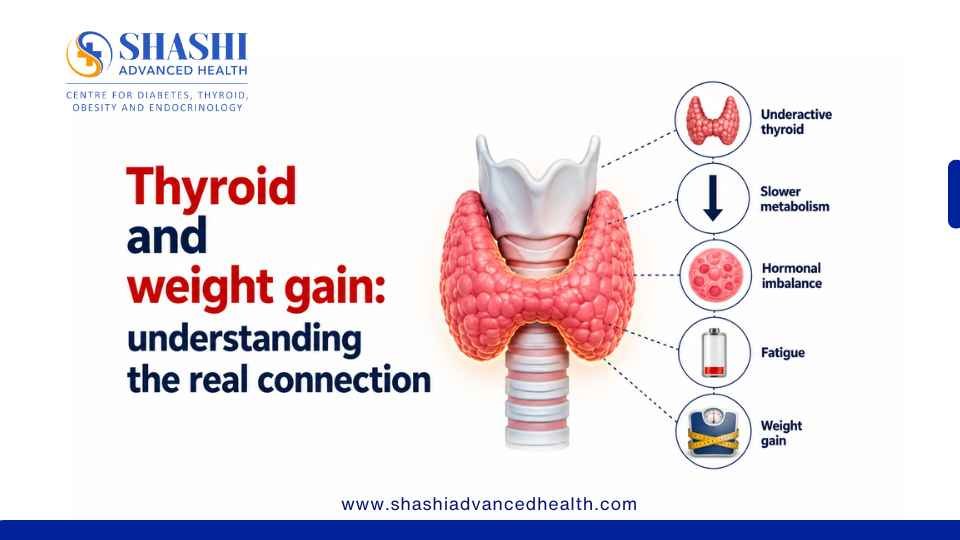
The thyroid is a small butterfly-shaped gland located at the front of the neck. It produces two important hormones—T3 (Triiodothyronine) and T4 (Thyroxine)—that regulate the body's metabolism.
These hormones influence:
- How many calories your body burns at rest
- Body temperature
- Heart rate
- Energy production
- Digestion
- Brain function
- Muscle performance
When thyroid hormone levels fall, metabolism slows down. When hormone levels rise, metabolism speeds up. However, metabolism is only one piece of the weight-management puzzle.
Can Hypothyroidism Cause Weight Gain?
Yes—but usually not as much as many people believe.
An underactive thyroid (hypothyroidism) can reduce metabolic rate and contribute to gradual weight gain. However, studies show that the weight increase is often modest, commonly around 2–5 kg (5–10 pounds), depending on the severity of thyroid hormone deficiency.
Much of this weight is caused by fluid and salt retention rather than an increase in body fat. This explains why many people with hypothyroidism describe feeling swollen, puffy, or bloated.
Once thyroid hormone levels are corrected with appropriate treatment, much of the excess fluid is often lost, although significant fat loss usually requires additional lifestyle changes.
Why Is the Thyroid Often Blamed?
Weight gain is one of the most common reasons people request thyroid testing. However, medical research shows that thyroid disease alone rarely explains obesity.
In most people, weight gain results from a combination of factors including:
- High calorie intake
- Physical inactivity
- Poor sleep
- Stress
- Insulin resistance
- Hormonal conditions such as PCOS
- Certain medications
- Age-related metabolic changes
Although thyroid hormones influence metabolism, they are rarely the sole cause of significant obesity.
What About Subclinical Hypothyroidism?
Subclinical hypothyroidism occurs when the TSH level is mildly elevated while thyroid hormone levels remain within the normal range.
Many people assume this mild abnormality explains weight gain, but scientific studies have shown that its effect on body weight is generally small and inconsistent.
This is why treatment decisions should always be based on symptoms, blood test results, age, pregnancy status, and overall clinical evaluation—not on body weight alone.
Symptoms That Suggest Thyroid Disease
Weight gain alone does not diagnose hypothyroidism. It becomes more likely when accompanied by several of the following symptoms:
- Persistent fatigue
- Feeling unusually cold
- Dry skin
- Hair loss
- Constipation
- Hoarse voice
- Slow heart rate
- Muscle weakness
- Heavy or irregular menstrual periods
- Difficulty concentrating ("brain fog")
If several of these symptoms are present, thyroid function testing is recommended.
How Is Thyroid Disease Diagnosed?
Diagnosis requires blood tests rather than symptoms alone.
Common investigations include:
- TSH (Thyroid Stimulating Hormone)
- Free T4
- Free T3 (when indicated)
- Anti-TPO antibodies (to evaluate autoimmune thyroid disease)
Results should always be interpreted alongside symptoms and medical history by a healthcare professional.
What Can Thyroid Treatment Achieve?
Treating hypothyroidism restores thyroid hormone levels to normal and improves symptoms such as fatigue, cold intolerance, constipation, and fluid retention.
However, thyroid hormone replacement is not a weight-loss medication.
If excess body fat developed due to lifestyle, insulin resistance, or other metabolic factors, additional strategies such as nutrition, physical activity, sleep optimization, and weight-management programs remain essential.
Healthy Weight Management Beyond the Thyroid
Successful long-term weight management usually involves several lifestyle factors working together:
- Eating balanced, nutrient-rich meals
- Regular physical activity
- Strength training to preserve muscle mass
- Adequate sleep (7–9 hours)
- Stress management
- Treatment of insulin resistance or PCOS if present
- Regular follow-up with your healthcare team
Looking beyond the thyroid often leads to more successful and sustainable weight loss.
The Bottom Line
Thyroid disease can contribute to weight gain, but it rarely explains significant obesity on its own. In most people, hypothyroidism causes only modest weight changes, much of which is related to fluid retention rather than fat accumulation.
If weight gain persists despite normal thyroid hormone levels or appropriate thyroid treatment, other factors such as nutrition, physical activity, insulin resistance, sleep quality, stress, and hormonal conditions should also be evaluated.
The most effective approach is to treat thyroid disease when present while also addressing the broader lifestyle and metabolic factors that influence body weight.
Need Expert Endocrine Care?
Book a consultation with our specialist endocrinologists at Shashi Advanced Health Clinics, Bangalore.
Book Appointment on WhatsApp