
Thyroid Disorders During Pregnancy: What Every Mother Should Know
Why Maternal Thyroid Balance Matters From Week One
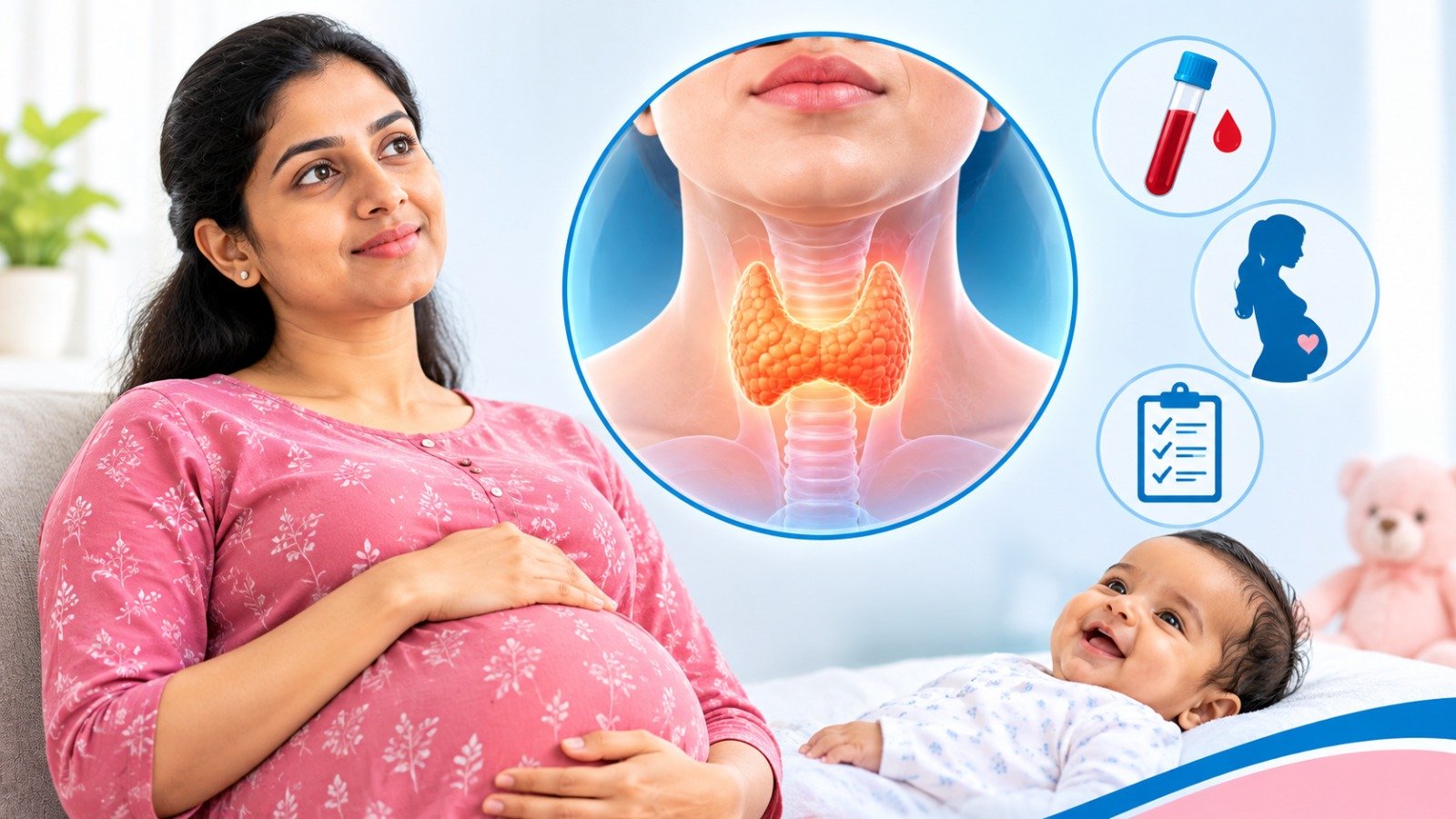
During pregnancy, your thyroid gland works harder to support both your metabolism and your baby’s early brain and nervous system development. Because the developing baby does not produce its own thyroid hormone during the first 12 to 14 weeks, it relies completely on the mother’s supply. Detecting and managing thyroid disorders during pregnancy early helps ensure a healthy pregnancy and safe delivery.
How Pregnancy Naturally Changes Thyroid Hormones
Two normal pregnancy hormones temporarily shift thyroid blood test results, even in women without thyroid disease:
- Human chorionic gonadotropin (hCG): Rising sharply in the first trimester, hCG mildly stimulates the thyroid gland. This naturally lowers TSH slightly in early pregnancy and can occasionally cause temporary hyperthyroidism.
- Estrogen: Increases thyroid-binding proteins in the blood, raising total T4 and T3 measurements—which is why doctors rely on TSH and carefully interpreted Free T4 rather than total hormone levels alone.
Iodine requirements also increase by nearly 50% during pregnancy and breastfeeding, making adequate dietary iodized salt and prenatal nutrition essential.
Hypothyroidism During Pregnancy
Hypothyroidism (an underactive thyroid) is the most common thyroid condition seen in expectant mothers in India, most often caused by autoimmune Hashimoto’s thyroiditis. Learn more in our clinical overview of hypothyroidism in pregnancy.
If left untreated, overt hypothyroidism increases the risk of miscarriage, gestational hypertension, anemia, preterm birth, and impaired neurocognitive development in the baby. The reassuring news is that levothyroxine is a safe, bioidentical hormone replacement that protects both mother and baby when properly dosed.
Crucial Tip if You Already Take Thyroid Tablets: As soon as a pregnancy test turns positive, contact your endocrinologist or obstetrician right away. Most women taking levothyroxine need roughly a 25–30% dose increase (often two extra tablets per week) early in the first trimester to keep pace with pregnancy demands.
Understanding Pregnancy TSH Targets
Non-pregnant laboratory reference ranges do not apply during pregnancy. Laboratories ideally use trimester-specific ranges, and when those are unavailable, international endocrine guidelines generally apply tighter upper TSH limits:
| Stage | Typical Target / Monitoring Focus |
|---|---|
| Preconception | In women already on levothyroxine, TSH is typically optimized below 2.5 mIU/L before conception. |
| First Trimester | Lower normal TSH limits apply; test TSH every 4 weeks while adjusting levothyroxine. |
| Second & Third Trimesters | Continue monitoring at least once per trimester (or every 4–6 weeks if doses changed). |
| Postpartum (After Delivery) | Pre-pregnancy dose is usually resumed after delivery, with a repeat TSH check at 6 weeks. |
In subclinical hypothyroidism (mildly raised TSH with normal Free T4), testing TPO antibodies helps your thyroid specialist decide whether levothyroxine is recommended.
Hyperthyroidism During Pregnancy
An overactive thyroid during pregnancy is less common than hypothyroidism, but requires careful distinction between two very different causes:
- Gestational Transient Thyrotoxicosis: Driven by high hCG levels in early pregnancy (often alongside severe morning sickness or twin pregnancies). It usually resolves naturally by week 16–18 and rarely needs anti-thyroid drugs.
- Graves’ Disease: An autoimmune condition driven by TSH-receptor antibodies (TRAb). Untreated overt Graves’ disease raises risks of preeclampsia, heart strain, fetal growth restriction, and preterm delivery.
When anti-thyroid medication is necessary, endocrinologists tailor the exact choice (commonly propylthiouracil in the first trimester, switching when appropriate later) at the lowest dose that keeps maternal Free T4 at the upper edge of normal—avoiding over-treatment that could affect the baby’s thyroid. Radioactive iodine is strictly avoided during pregnancy.
Practical Tablet Rules for Expectant Mothers
Many pregnant women struggle with rising TSH not because their dose is wrong, but because prenatal supplements block levothyroxine absorption in the stomach:
- Take levothyroxine first thing in the morning on an empty stomach with plain water, 30–60 minutes before breakfast or tea/coffee.
- Separate iron, calcium, and multivitamins by at least 4 hours—taking them at lunchtime or bedtime prevents them from binding your thyroid tablet.
- If morning sickness causes vomiting within 30 minutes of your tablet, ask your doctor how to handle missed or repeated doses.
Watch Out After Delivery: Postpartum Thyroiditis
Thyroid changes do not end in the delivery room. Up to 5–8% of mothers—especially those with positive TPO antibodies or Type 1 diabetes—develop postpartum thyroiditis within the first year after childbirth. It can cause a brief hyperthyroid phase followed by hypothyroidism that looks like “normal new-mom exhaustion.” If you experience severe fatigue, hair fall, mood shifts, or palpitations 2–6 months postpartum, get your TSH checked.
Pregnancy Thyroid Checklist
| Do | Don’t |
|---|---|
|
✔ Test TSH early once pregnancy is confirmed ✔ Notify your endocrinologist immediately if already on thyroid pills ✔ Space iron and calcium 4+ hours apart from levothyroxine ✔ Monitor thyroid levels every 4 weeks in the first half of pregnancy ✔ Recheck TSH 6 weeks after delivery |
✘ Stop levothyroxine out of fear it might harm the baby ✘ Swallow prenatal iron or calcium alongside your thyroid tablet ✘ Rely on non-pregnant lab ranges to interpret pregnancy TSH ✘ Take high-dose iodine or kelp supplements without medical advice |
Bottom Line
Well-controlled thyroid disease carries an excellent outlook for both mother and baby. Whether you are planning pregnancy with an existing condition or newly diagnosed during antenatal screening, timely testing, correct tablet timing, and individualized care from an endocrinologist experienced in pregnancy endocrine care keep thyroid hormones safely on target from conception through postpartum recovery.
Need Expert Endocrine Care?
Book a consultation with our specialist endocrinologists at Shashi Advanced Health Clinics, Bangalore.
Book Appointment on WhatsApp