
Thyroid Nodules and Neck Swelling: When Should You Be Concerned?
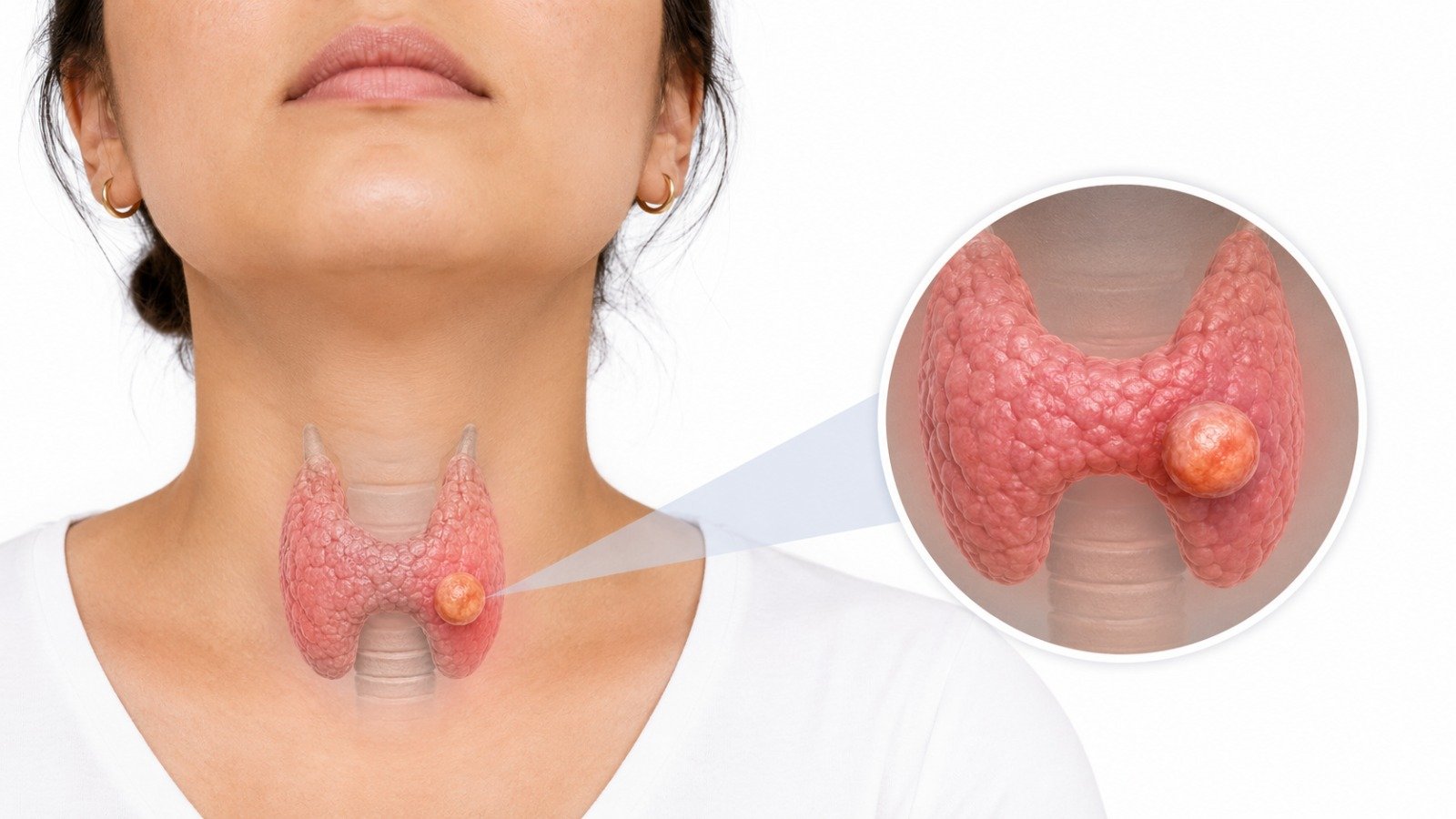
Thyroid Nodules and Neck Swelling: When Should You Be Concerned?
Discovering a lump or swelling in your neck can be worrying. Many people immediately fear thyroid cancer, but the reality is much more reassuring. Thyroid nodules are extremely common, and the vast majority are non-cancerous (benign).
However, not every thyroid lump should be ignored. Some nodules require careful evaluation, particularly if they are increasing in size, causing pressure symptoms, or showing features that need further investigation.
As an Endocrinologist, Dr. Mahesh DM encourages patients not to panic—but also not to ignore a new or changing neck swelling. Early evaluation helps identify harmless nodules while ensuring that conditions requiring treatment are detected promptly.
What Is a Thyroid Nodule?
A thyroid nodule is a small lump that develops within the thyroid gland, located at the front of the neck just below the Adam's apple. Nodules may be solid, fluid-filled (cystic), or contain a mixture of both.
Many thyroid nodules cause no symptoms and are discovered during routine health examinations or imaging tests performed for unrelated reasons.
Although thyroid nodules become more common with increasing age, only a small percentage are cancerous.
Common Symptoms of Thyroid Nodules
Small thyroid nodules usually do not cause any discomfort. Larger nodules or an enlarged thyroid gland may produce symptoms such as:
- A visible lump or swelling in the front of the neck
- A feeling of fullness or pressure in the neck
- Difficulty swallowing food
- Persistent throat discomfort
- Hoarseness or changes in the voice
- Occasional coughing without infection
- Difficulty breathing when lying down or during exertion
Many people have thyroid nodules without experiencing any symptoms at all.
Warning Signs That Should Not Be Ignored
While most thyroid nodules are harmless, certain features require prompt medical evaluation.
- A lump that is increasing in size.
- A hard or fixed swelling that does not move.
- Persistent hoarseness lasting several weeks.
- Difficulty swallowing solids or liquids.
- Difficulty breathing or noisy breathing.
- Swollen lymph nodes in the neck.
- Family history of thyroid cancer.
- History of radiation exposure to the head or neck.
These symptoms do not necessarily mean cancer, but they should always be assessed by a healthcare professional.
When Is Neck Swelling an Emergency?
Most thyroid nodules are not emergencies. However, immediate medical attention is needed if neck swelling causes:
- Difficulty breathing
- Rapidly increasing neck swelling
- Noisy breathing (stridor)
- Severe difficulty swallowing saliva or food
These symptoms may indicate pressure on the airway and should never be ignored.
How Are Thyroid Nodules Evaluated?
A careful assessment helps determine whether a thyroid nodule requires observation or treatment.
Your endocrinologist may recommend:
- Detailed medical history and physical examination
- Neck ultrasound to evaluate size and appearance
- Blood tests including TSH and thyroid hormone levels
- Fine Needle Aspiration (FNA) biopsy if the nodule appears suspicious
- Additional imaging when indicated
Ultrasound plays a key role in identifying nodules that require biopsy while avoiding unnecessary procedures for low-risk nodules.
Can Thyroid Nodules Be Cancer?
Yes, but only a small percentage of thyroid nodules are cancerous.
The encouraging news is that most thyroid cancers grow slowly and have an excellent prognosis when diagnosed early. Modern treatment options are highly effective, and long-term survival rates are excellent for most patients.
This is why doctors focus on accurate diagnosis rather than assuming every thyroid lump is cancer.
How Are Thyroid Nodules Treated?
Treatment depends on the size, symptoms, thyroid function, and biopsy findings.
- Small benign nodules may only require periodic ultrasound follow-up.
- Thyroid hormone disorders are treated with appropriate medication.
- Large nodules causing pressure symptoms may require surgery.
- Suspicious or cancerous nodules are managed according to established thyroid cancer guidelines.
Many patients never need surgery and can be safely monitored over time.
When Should You See an Endocrinologist?
Arrange a medical evaluation if you notice:
- A new neck swelling or lump.
- A thyroid lump that is increasing in size.
- Persistent hoarseness.
- Difficulty swallowing or breathing.
- Unexplained thyroid function abnormalities.
- A family history of thyroid cancer or thyroid disease.
Early assessment provides reassurance for benign conditions and allows timely treatment when needed.
The Bottom Line
Finding a thyroid lump does not automatically mean cancer. In fact, most thyroid nodules are benign and require only observation or routine follow-up.
However, any new neck swelling, enlarging lump, persistent voice change, difficulty swallowing, or breathing problem should always be evaluated promptly.
According to Dr. Mahesh DM, Endocrinologist, the best approach is to remain calm, seek timely medical evaluation, and follow appropriate investigations. Early diagnosis provides peace of mind and ensures the best possible outcome if treatment is required.
Need Expert Endocrine Care?
Book a consultation with our specialist endocrinologists at Shashi Advanced Health Clinics, Bangalore.
Book Appointment on WhatsApp