
What to Eat on GLP-1 Medications: A Complete Diet Guide
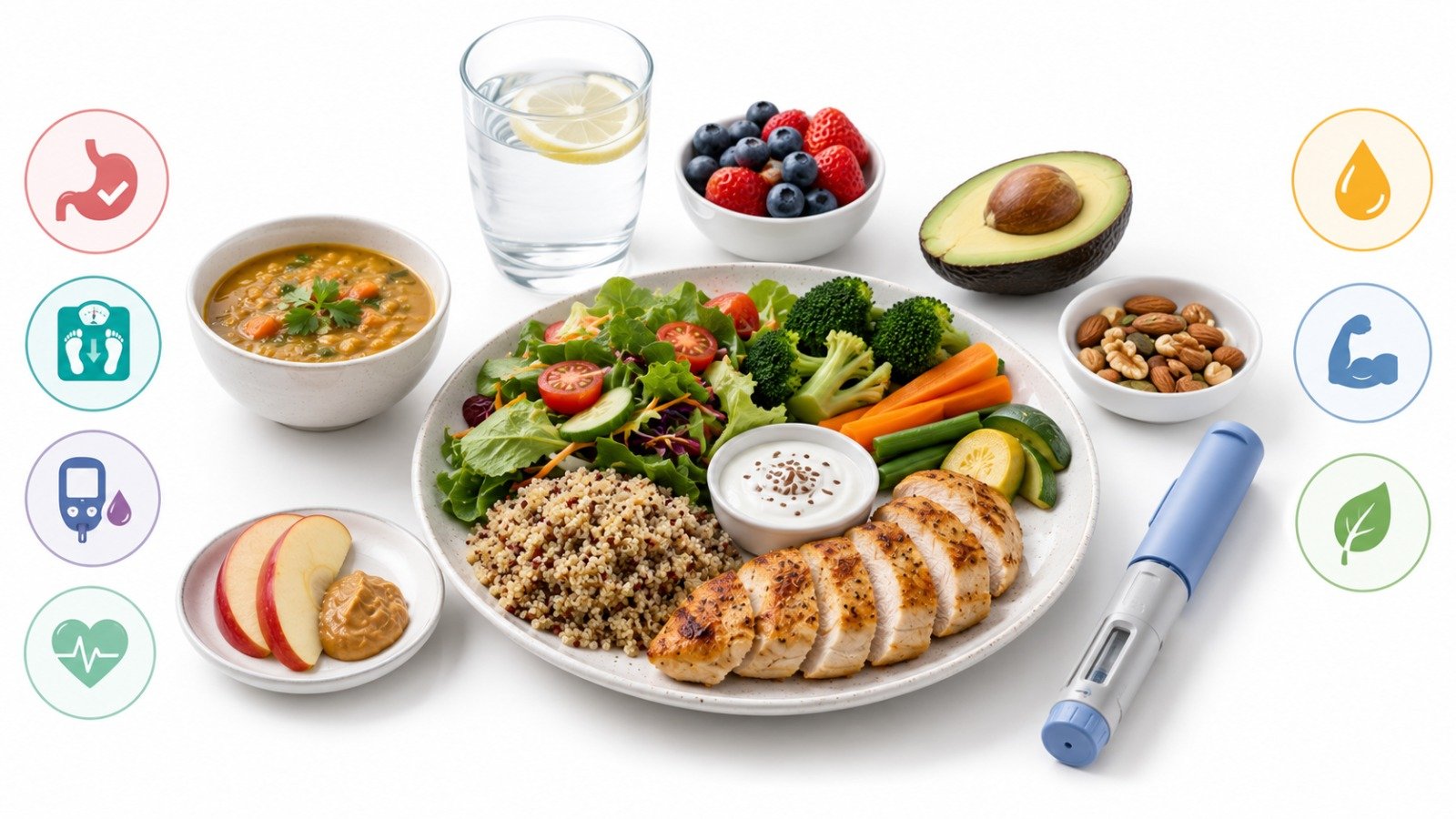
What to Eat on GLP-1 Medications: A Complete Diet Guide
GLP-1 medications such as semaglutide and tirzepatide have become popular treatments for weight loss and type 2 diabetes. These medicines reduce appetite and help you feel full for longer, making it easier to eat less. However, your diet still plays a vital role. The right food choices can reduce common side effects such as nausea, bloating, constipation, and fatigue while helping preserve muscle, maintain energy, and support long-term weight loss success.
Why Diet Still Matters
GLP-1 medications slow stomach emptying and reduce hunger. While this helps decrease calorie intake, it can also make it easier to eat too little. Without careful planning, you may not get enough protein, fiber, vitamins, minerals, or fluids. Poor nutrition can increase the risk of muscle loss, weakness, constipation, dehydration, and fatigue.
The goal isn't simply to eat less—it's to eat smarter by choosing nutrient-rich foods that nourish your body while supporting healthy weight loss.
Core Nutrition Priorities
1. Protein First
Start every meal with protein. Protein keeps you feeling full, protects muscle mass during weight loss, and helps maintain stable blood sugar levels.
Good protein choices include:
- Eggs
- Chicken and fish
- Paneer and tofu
- Greek yogurt or curd
- Lentils, dal, rajma, chana, and beans
- Protein shakes (if recommended)
2. Fill Half Your Plate with Vegetables
Non-starchy vegetables provide fiber, vitamins, and minerals while keeping calories low. They also help improve digestion and reduce constipation.
Choose vegetables like:
- Spinach
- Broccoli
- Cauliflower
- Cabbage
- Beans
- Cucumber
- Tomatoes
- Okra (Ladies Finger)
3. Healthy Fats in Moderation
Healthy fats support heart health but should be eaten in moderate portions because high-fat meals may worsen nausea or make you feel overly full.
Choose: Nuts, seeds, olive oil, avocado, chia seeds, and flaxseed.
4. Choose Smart Carbohydrates
When adding carbohydrates, prefer high-fiber options and keep portions moderate.
Better choices include:
- Oats
- Brown rice
- Millets
- Whole wheat
- Sweet potato
- Whole fruits
Limit refined flour (maida), white bread, sugary drinks, sweets, pastries, and large servings of white rice.
Foods to Choose vs Foods to Limit
| Choose More Often | Limit or Avoid |
|---|---|
|
✓ Eggs ✓ Greek yogurt / curd ✓ Paneer & tofu ✓ Dal, rajma, chana ✓ Chicken & fish ✓ Vegetables & salads ✓ Oats & millets ✓ Brown rice ✓ Whole fruits |
✗ Fried foods ✗ Very oily meals ✗ Sugary drinks ✗ Desserts & sweets ✗ Packaged snacks ✗ White bread & maida products ✗ Large portions of white rice ✗ Alcohol (if nausea worsens) |
How to Eat While Taking GLP-1 Medications
- Eat smaller meals instead of large portions.
- Eat slowly and chew food thoroughly.
- Stop eating before you feel overly full.
- Drink plenty of water throughout the day.
- Increase fiber gradually if constipation develops.
- Try eating Protein → Vegetables → Carbohydrates in that order.
Simple Indian Meal Ideas
| Meal | Healthy Options |
|---|---|
| Breakfast | Moong dal chilla with paneer, or eggs with vegetables. |
| Lunch | Dal, sabzi, salad, and 1–2 whole wheat rotis. |
| Snack | Roasted chana, fruit, or curd. |
| Dinner | Vegetable khichdi with extra dal, or grilled fish/chicken/paneer with sabzi. |
Key Takeaways
- ✔ Eat protein first at every meal.
- ✔ Fill your plate with vegetables.
- ✔ Choose whole grains instead of refined carbohydrates.
- ✔ Stay hydrated throughout the day.
- ✔ Avoid fried, sugary, and heavily processed foods.
- ✔ Eat smaller portions and stop before feeling overly full.
Bottom Line
The best diet while taking GLP-1 medications is not a crash diet. It is a balanced eating pattern that is high in protein, rich in fiber, based on minimally processed foods, and eaten in sensible portions. By prioritizing protein, vegetables, hydration, and healthy food choices, you can reduce side effects, protect muscle, improve blood sugar control, and achieve healthier, more sustainable weight loss.
Need Expert Endocrine Care?
Book a consultation with our specialist endocrinologists at Shashi Advanced Health Clinics, Bangalore.
Book Appointment on WhatsApp