
Hashimoto’s Thyroiditis: Symptoms, Diagnosis and Treatment
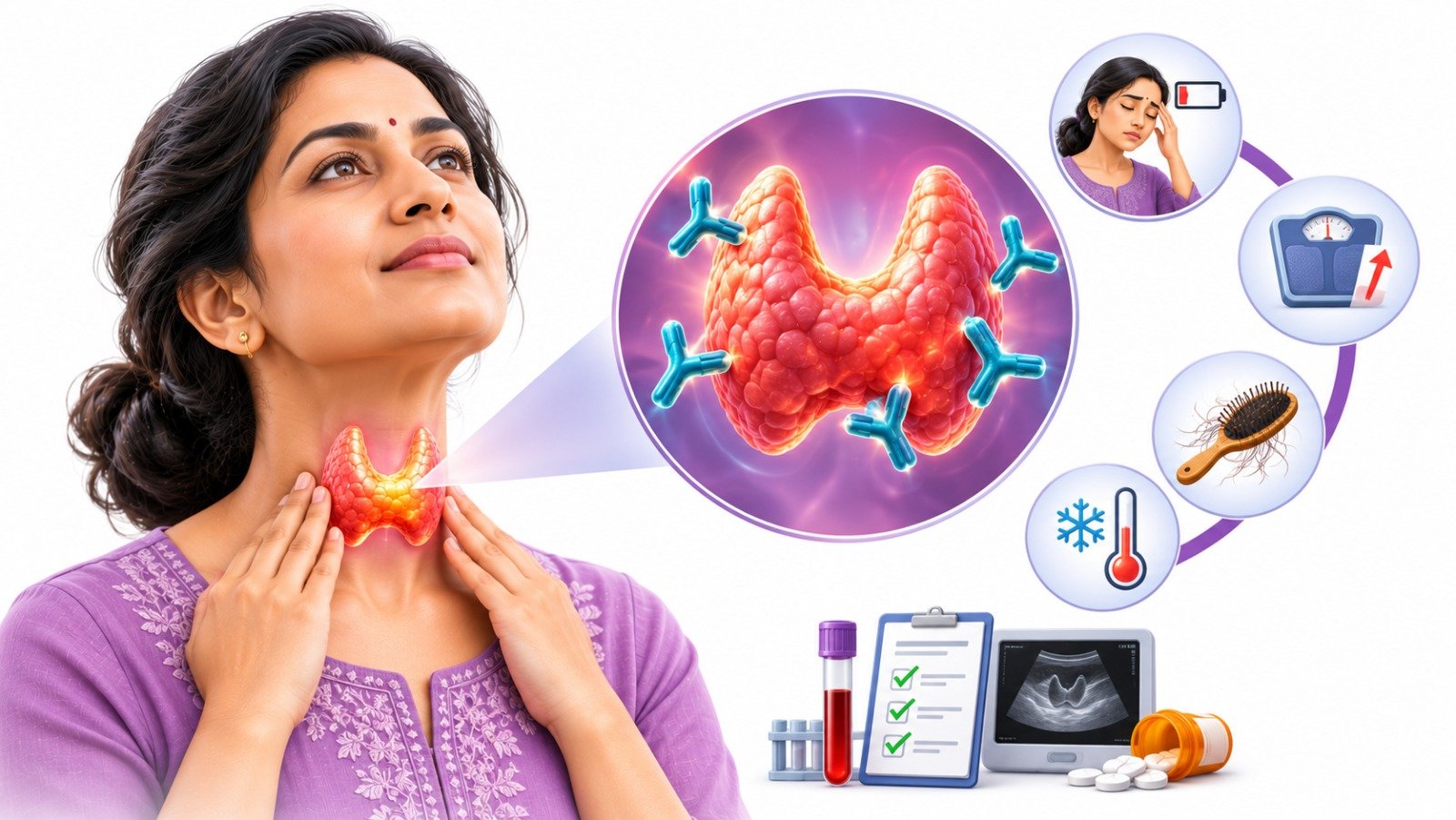
Understanding the Root Cause Behind Most Underactive Thyroids
When a blood test reveals an underactive thyroid (hypothyroidism), most patients ask why their gland slowed down in the first place. Across India and worldwide, the most frequent answer is Hashimoto’s thyroiditis—a slow, chronic autoimmune condition in which the body’s immune system gradually reduces the thyroid’s hormone-making capacity. With the right testing and consistent treatment, people with Hashimoto’s lead completely normal, energetic lives.
What Happens Inside the Thyroid in Hashimoto’s?
Your thyroid gland sits at the base of the front neck and produces T4 and T3 hormones that set the pace for metabolism, heart rate, digestion, menstrual cycles, and brain alertness. In Hashimoto’s thyroiditis, immune cells infiltrate the thyroid tissue and antibodies—most commonly anti-TPO (thyroid peroxidase) and anti-thyroglobulin—appear in the bloodstream.
The process usually unfolds quietly over years. In the earliest stage, thyroid hormone levels remain completely normal even though antibodies are positive. Later, TSH rises subtly (subclinical hypothyroidism), and eventually Free T4 drops (overt hypothyroidism). Occasionally, early inflammation briefly leaks stored hormone into the blood (“Hashitoxicosis”) before the gland settles into hypothyroidism.
Common Symptoms to Watch For
Symptoms develop slowly and often resemble everyday work exhaustion, stress, or aging:
- Persistent tiredness, sluggishness, or daytime sleepiness
- Unexplained modest weight gain or puffiness (see how thyroid affects weight)
- Feeling unusually cold when others are comfortable
- Dry skin, brittle nails, and diffuse hair thinning
- Constipation, muscle cramps, or slow recovery after exercise
- Irregular or heavy menstrual periods and fertility difficulty
- Painless fullness or swelling in the front of the neck (goiter)
- Brain fog, low mood, or slowed concentration
How Is Hashimoto’s Thyroiditis Diagnosed?
A physical neck exam plus targeted blood tests confirm both thyroid function and autoimmune origin:
| Test | What It Shows |
|---|---|
| TSH (Thyroid Stimulating Hormone) | The most sensitive first-line marker—rises when the thyroid slows down. |
| Free T4 | Distinguishes subclinical hypothyroidism (normal Free T4) from overt hypothyroidism (low Free T4). |
| Anti-TPO Antibodies | Positive in ~90% of Hashimoto’s cases, confirming autoimmune thyroiditis. |
| Thyroid Ultrasound | Used if a goiter or thyroid lump/nodule is felt on neck examination. |
Important Perspective on TPO Numbers: Once anti-TPO confirms Hashimoto’s, repeating antibody levels every few months rarely changes treatment. Your endocrinologist monitors TSH (and Free T4 when needed) rather than chasing antibody numbers down to zero.
Treatment: Getting Levothyroxine Right
If your TSH and Free T4 remain normal despite positive antibodies, you generally only need periodic TSH monitoring (unless planning pregnancy or meeting specific clinical criteria). When thyroid hormone replacement is needed, standard treatment is daily levothyroxine—an exact replica of natural T4 hormone.
To keep your dose steady and effective:
- Take it on an empty stomach with plain water first thing in the morning, waiting 30–60 minutes before tea, coffee, milk, or breakfast.
- Keep a 4-hour gap from iron tablets, calcium supplements, antacids, and soy-heavy meals, which block tablet absorption.
- Avoid switching brands unnecessarily without rechecking TSH 6–8 weeks later.
- Watch biotin supplements: Hair/nail supplements containing high-dose biotin can falsely distort thyroid lab assays—pause biotin 2–3 days before blood draws if advised.
Hashimoto’s Diet Myths vs. Evidence
Online advice often creates unnecessary food fear around Hashimoto’s. Here is what medical evidence supports:
- Cooked cruciferous vegetables (cabbage, cauliflower, broccoli): Completely safe in normal everyday Indian servings—cooking deactivates goitrogenic compounds.
- Gluten-free diets: Only medically necessary if you have celiac disease or diagnosed wheat intolerance (autoimmune thyroid patients have a slightly higher rate of celiac disease, so screen before eliminating gluten).
- High-dose iodine drops or kelp supplements: Can actually worsen autoimmune thyroid inflammation—stick to regular iodized table salt unless advised otherwise.
- Balanced nutrition: Whole foods, adequate protein, iron, and vitamin D support overall energy alongside prescribed thyroid care (explore our thyroid care clinic).
Frequently Asked Questions
If my TSH is normal on levothyroxine, why do I still feel tired?
Fatigue is rarely caused by thyroid levels alone. Once TSH is stably in range, your doctor should check for iron deficiency/anemia, vitamin D or B12 deficiency, poor sleep quality, sleep apnea, or blood sugar swings before adjusting your thyroid dose unnecessarily.
Does Hashimoto’s require extra care if I plan a pregnancy?
Yes. Women with Hashimoto’s who take levothyroxine typically need closer TSH monitoring and an early dose increase as soon as pregnancy is confirmed, as thyroid demand rises sharply in the first trimester.
Can lifestyle changes reverse positive anti-TPO antibodies?
Healthy sleep, stress balance, and good nutrition improve overall well-being, but no proven diet or supplement eliminates thyroid antibodies or replaces levothyroxine once thyroid reserve has declined.
Bottom Line
While Hashimoto’s thyroiditis is usually a long-term condition rather than a one-time cure, it is one of the most manageable disorders in endocrinology. Accurate TSH monitoring, clean morning tablet timing, and evidence-based guidance—without restrictive fad diets or risky supplements—keep hormones balanced for life. Connect with our thyroid specialists for individualized dosing and follow-up.
Need Expert Endocrine Care?
Book a consultation with our specialist endocrinologists at Shashi Advanced Health Clinics, Bangalore.
Book Appointment on WhatsApp