
Irregular Periods: When It’s a Hormonal Problem
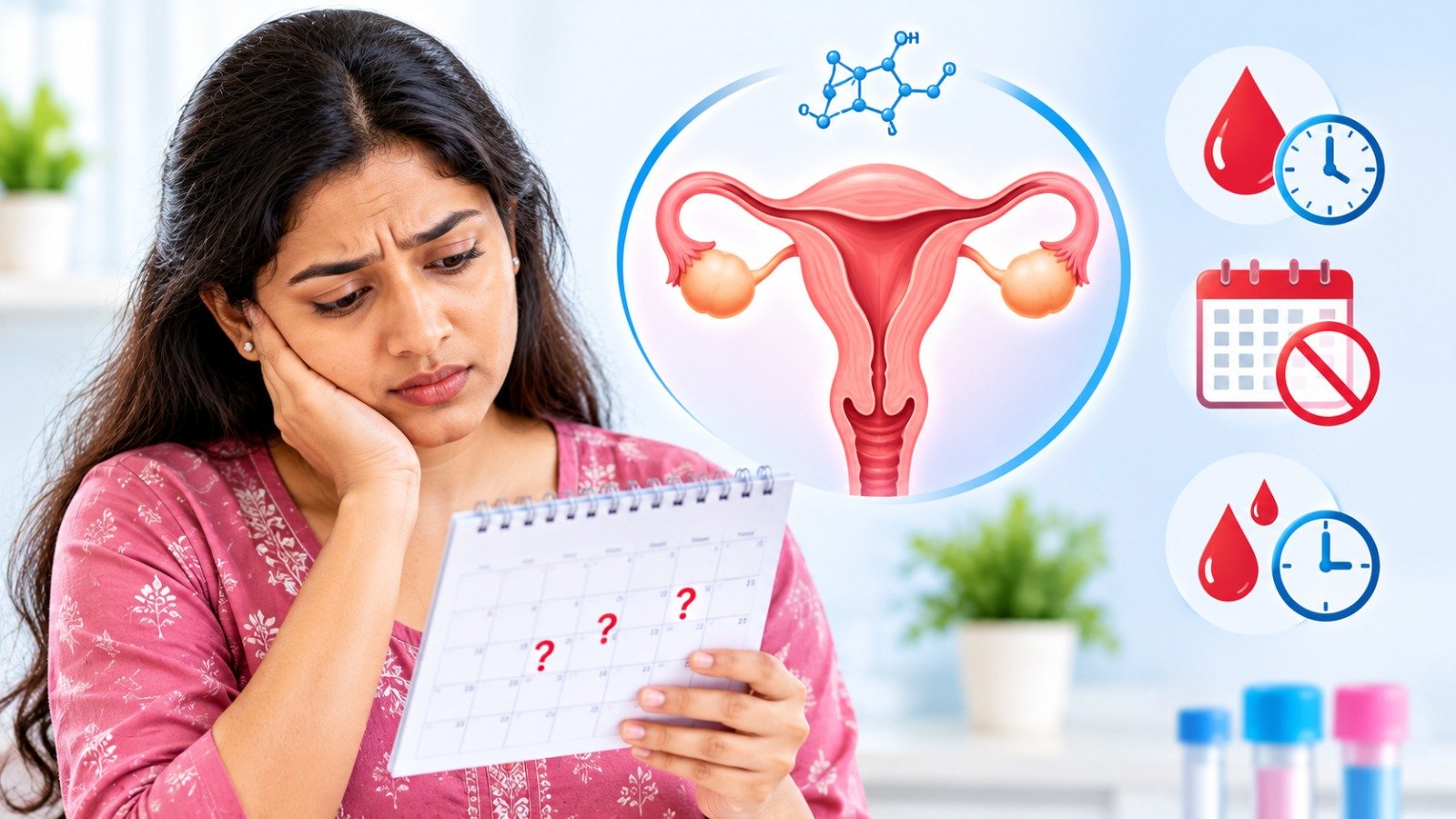
Why Your Menstrual Cycle Is a Vital Sign of Hormonal Health
An occasional late period during exam stress or travel is common, but when cycles repeatedly arrive early, get delayed for weeks, or disappear for months, your body may be signaling an underlying hormonal imbalance. Rather than simply taking pills to trigger withdrawal bleeding, identifying the exact endocrine cause protects fertility, bone density, and long-term metabolic health.
What Counts as an Irregular Period?
A healthy adult menstrual cycle typically repeats every 21 to 35 days (counting from the first day of one period to the first day of the next), with bleeding lasting 3 to 7 days. Your cycle is considered irregular if you regularly experience:
- Cycles shorter than 21 days or longer than 35 days (fewer than 8–9 periods a year)
- Skipping three or more consecutive periods
- Cycle lengths varying by more than 7–9 days from month to month
- Unusually heavy bleeding, spotting between periods, or bleeding lasting over 7 days
Common Hormonal Causes Behind Irregular Periods
Menstrual regularity depends on smooth signaling between the hypothalamus, pituitary gland, ovaries, thyroid, and adrenal glands. A disruption at any point along this axis alters ovulation.
| Hormonal Condition | How It Disrupts Periods | Other Clues to Watch For |
|---|---|---|
| PCOS (Polycystic Ovary Syndrome) | Elevated insulin and androgens prevent regular egg release (ovulation). | Chin/upper-lip hair, stubborn acne, weight gain, dark neck skin patches |
| Thyroid Disorders | Both low and high thyroid hormones interfere with ovarian signaling. | Fatigue, heavy flow (hypothyroid) or light/scanty periods & weight loss (hyperthyroid) |
| High Prolactin (Hyperprolactinemia) | Excess pituitary prolactin suppresses GnRH, pausing ovulation. | Milky nipple discharge (when not breastfeeding), headaches, vision changes |
| Perimenopause or Early Ovarian Insufficiency (POI) | Declining ovarian reserve leads to erratic estrogen swings. | Hot flashes, night sweats, sleep trouble, vaginal dryness |
| Hypothalamic Amenorrhea | Severe calorie restriction, rapid weight loss, or intense exercise pauses reproductive hormones. | Low BMI, stress, fatigue, bone fractures |
Less common endocrine causes—such as non-classic congenital adrenal hyperplasia (NCCAH) or Cushing’s syndrome—can mimic PCOS, which is why thorough hormonal blood testing matters.
PCOS vs. “Normal” Teenage Variations
In the first two years after a girl’s first period, irregular cycles are often part of normal maturation of the brain–ovary hormone axis. However, cycles that remain spaced more than 35–45 days apart beyond two years—or appear alongside unwanted facial or body hair (hirsutism) and severe acne—deserve evaluation rather than waiting to “outgrow it.”
Similarly, women in their late 30s or 40s often dismiss skipped periods as stress when they may actually be entering perimenopause—or experiencing a treatable thyroid disorder.
How Endocrinologists Evaluate Irregular Cycles
Before prescribing any hormone tablets, an endocrinology evaluation for menstrual irregularities starts with a detailed cycle history and targeted tests (after ruling out pregnancy when sexually active):
- TSH and Free T4: Screens for underactive or overactive thyroid function.
- Morning Prolactin: Identifies hyperprolactinemia (stress, certain gastric/psychiatric medicines, or a benign pituitary prolactinoma).
- LH, FSH, and Estradiol: Distinguishes hypothalamic suppression, PCOS patterns, and early ovarian insufficiency.
- Androgens (Total/Free Testosterone, DHEAS, 17-OH Progesterone): Evaluates excess male-type hormone activity when acne or hirsutism is present.
- Fasting Glucose, HbA1c, and Lipid Profile: Checks for insulin resistance and metabolic risk, especially in PCOS.
- Pelvic Ultrasound: Assesses uterine lining thickness and ovarian appearance (note: ultrasound cysts alone do not diagnose PCOS).
Timing tip: Hormone blood tests are most informative when done early in the morning (ideally Day 2–5 of a natural cycle, or anytime if periods have stopped for months)—avoid starting oral contraceptives right before blood draws unless advised, as they mask baseline hormone levels.
Why Treating the Root Cause Matters
Taking repeated over-the-counter period-inducing tablets only sheds the uterine lining temporarily without fixing the underlying hormone signal. Untreated hormonal irregularity can lead to:
- Endometrial thickening (increasing long-term uterine lining risk if periods stay absent for many months)
- Difficulty conceiving due to infrequent ovulation
- Accelerated bone loss when estrogen stays chronically low
- Higher risk of prediabetes, Type 2 diabetes, and fatty liver in insulin-resistant PCOS
Frequently Asked Questions
Can stress alone delay my period?
Yes—severe physical illness, emotional stress, poor sleep, or rapid dieting can temporarily suppress hypothalamic hormones. If irregularity persists beyond 2–3 cycles, get evaluated to rule out thyroid, prolactin, or ovarian causes.
Do I always need birth control pills for PCOS?
No. While combined pills help regulate bleeding and reduce androgen symptoms when contraception is desired, lifestyle changes, modest weight loss when needed, and insulin-sensitizing strategies can restore natural ovulation in many women.
Should I test my hormones while taking hormone pills?
Oral contraceptives suppress natural LH, FSH, estradiol, and ovarian testosterone, making those tests difficult to interpret. Discuss the right timing with your doctor before testing.
Bottom Line
Persistent irregular periods are your body’s early feedback system—not something to normalize or mask indefinitely. Whether the cause is PCOS, thyroid dysfunction, high prolactin, or perimenopause, a structured workup identifies the exact hormonal pathway and allows targeted, long-term treatment. If your cycles have been unpredictable for more than three months, book a consultation with an endocrinologist at Shashi Advanced Health for a clear diagnosis and personalized plan.
Need Expert Endocrine Care?
Book a consultation with our specialist endocrinologists at Shashi Advanced Health Clinics, Bangalore.
Book Appointment on WhatsApp