Osteoporosis in Women After 40: Prevention and Treatment
Why Protecting Bone Strength Starts Years Before Menopause
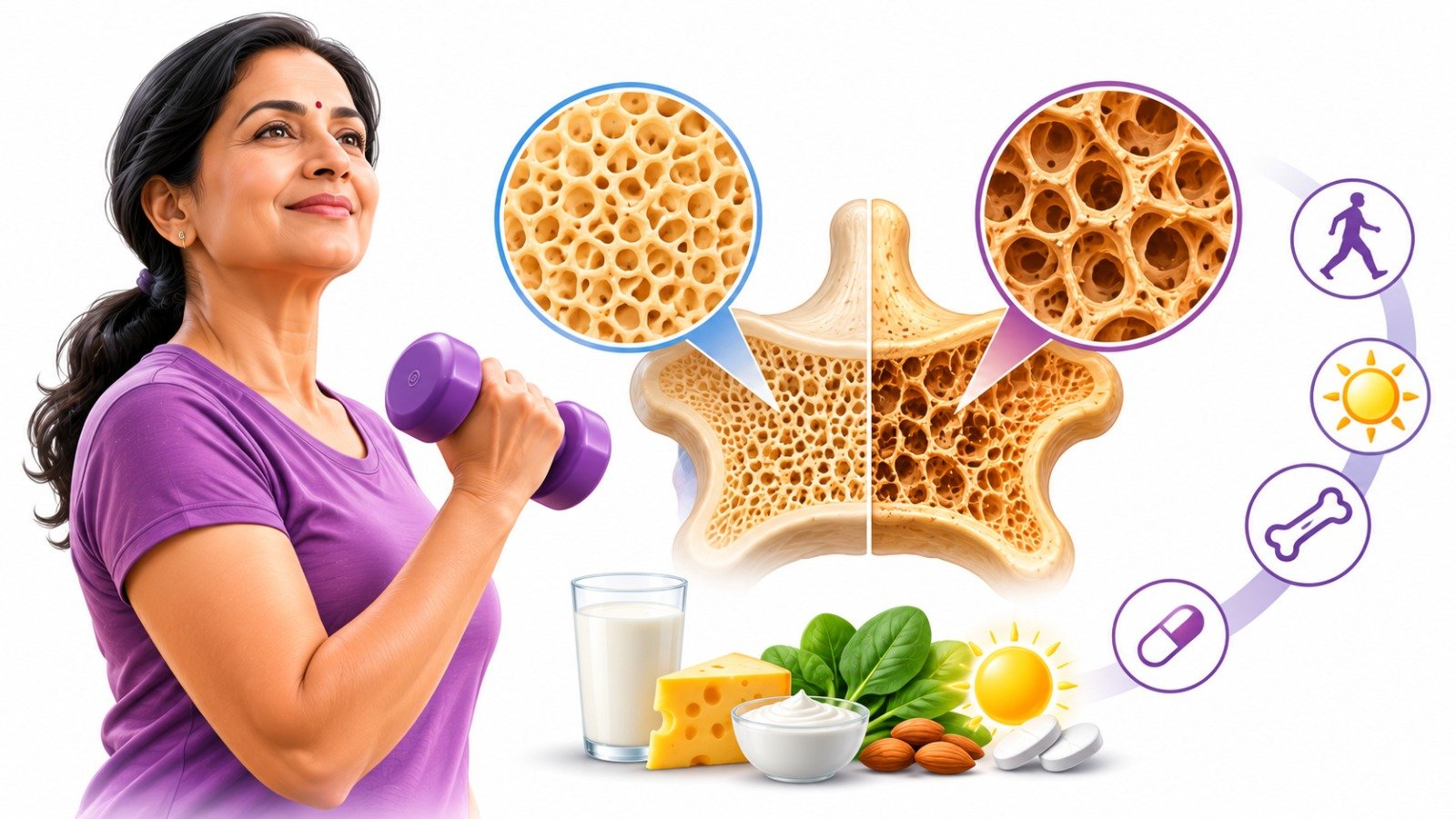
Many women think of fragile bones as a problem only in their 70s. In reality, bone mass peaks around age 30, begins tapering gradually afterward, and drops sharply during the perimenopause and menopause transition as estrogen falls. In India, widespread vitamin D deficiency, low dietary calcium, and indoor lifestyles mean osteoporosis in women after 40 often progresses silently until a minor slip causes a fracture.
Why Women Lose Bone Faster After Age 40
Estrogen is a natural guardian of the skeleton—it slows down cells that break down old bone while supporting new bone formation. As ovarian estrogen levels begin fluctuating in the 40s and drop steeply around menopause (typically ages 45–52 in Indian women), women can lose up to 1–2% of bone density per year around the menopausal window.
Before full osteoporosis sets in, bone thinning passes through an early warning stage called osteopenia. Catching bone loss during your 40s or early 50s makes prevention far simpler than treating fractures later.
Risk Factors Every Woman Over 40 Should Check
Bone loss happens faster when hormonal shifts combine with medical or lifestyle factors:
- Early menopause (before age 45) or surgical removal of ovaries without hormone replacement
- Low body weight or petite frame (low BMI provides less mechanical bone loading)
- Family history of osteoporosis or hip fracture in a parent
- Chronic vitamin D deficiency or low calcium intake
- Endocrine & medical triggers: Long-term steroid tablets, overactive thyroid (or excessive levothyroxine dosing), primary hyperparathyroidism, Type 1 or long-standing Type 2 diabetes, and rheumatoid arthritis
- Prior fragility fracture: Breaking a wrist, ankle, rib, or spine bone from a simple standing-height fall
How Osteoporosis Is Diagnosed: The DEXA Scan
Because bone thinning causes zero pain, you cannot rely on blood calcium alone—blood calcium can stay completely normal even while bones weaken. Diagnosis uses a painless, low-radiation X-ray test called a central DEXA scan of the hip and lower spine (and sometimes the forearm).
| DEXA T-Score | Category | What It Means |
|---|---|---|
| -1.0 or higher | Normal | Maintain bone-healthy habits and monitor risk factors. |
| Between -1.0 and -2.5 | Osteopenia (Low Bone Mass) | Early warning stage; assess fracture risk (FRAX) and treat secondary causes. |
| -2.5 or lower | Osteoporosis | High fracture risk; targeted prescription bone medication is usually recommended. |
Alongside a DEXA scan, your osteoporosis specialist checks vitamin D, calcium, phosphorus, kidney function, TSH, and parathyroid hormone (PTH) to rule out hidden metabolic bone disorders. Watch also for silent signs like height loss of more than 2–4 cm or upper-back stooping, which can signal painless spinal compression fractures (pathological fractures).
Four Pillars of Bone Protection After 40
- 1. Weight-Bearing & Resistance Exercise: Walking, stair climbing, light impact exercise, and progressive strength training stimulate bone-building cells, while yoga/balance drills cut fall risk.
- 2. Adequate Calcium + Protein: Aim for roughly 1,000–1,200 mg of total daily calcium, ideally from food first (curd, milk, paneer, ragi/finger millet, sesame/til, leafy greens, tofu) with modest supplements only to bridge dietary gaps. Protein makes up nearly a third of bone volume—do not neglect daily protein!
- 3. Maintain Optimal Vitamin D: Safe sun exposure and doctor-guided vitamin D supplementation ensure calcium is actually absorbed from the gut (avoid unsupervised ultra-high weekly/monthly mega-doses without checking blood levels).
- 4. Fall-Proof Your Home: Good footwear, bright night-lights, non-slip bathroom mats, and regular vision checks prevent fractures before they happen.
Medical Treatments When Diet & Exercise Are Not Enough
When DEXA scores confirm osteoporosis or a woman has already suffered a fragility fracture, calcium and vitamin D alone will not rebuild lost bone strength. Modern evidence-based therapies include:
- Bisphosphonates (oral weekly or annual IV zoledronic acid): Slow bone breakdown and significantly reduce spine and hip fractures.
- Denosumab (6-monthly injection): Useful in selected patients, including certain women with impaired kidney function (note: must never be stopped abruptly without transition therapy).
- Anabolic (bone-building) therapies (teriparatide, romosozumab): Reserved for severe osteoporosis or multiple fractures to actively build new bone.
- Menopausal Hormone Therapy (MHT): In younger menopausal women who also have hot flashes (see our menopause guide), MHT preserves bone density while treating symptoms.
Explore full clinical protocols in our Endocrine Atlas bone health section.
Quick Bone-Health Checklist After 40
| Do | Don’t |
|---|---|
|
✔ Include dairy, ragi, greens, and adequate protein daily ✔ Perform resistance & balance exercises 2–3 times weekly ✔ Ask your doctor if you qualify for an early DEXA scan ✔ Report any height loss or sudden mid-back pain promptly |
✘ Assume normal blood calcium guarantees strong bones ✘ Rely on calcium tablets alone if DEXA shows osteoporosis ✘ Take repeated unsupervised high-dose vitamin D shots ✘ Ignore minor-fall fractures of the wrist, hip, or spine |
Bottom Line
Osteoporosis is silent—until a fracture disrupts your mobility and independence. Your 40s and 50s are the golden window to assess risk factors, optimize vitamin D, calcium, protein, and strength training, and get a timely DEXA scan when indicated. If you are approaching menopause, have lost height, or had a low-impact fracture, consult our metabolic bone specialists for an individualized bone protection plan.
Need Expert Endocrine Care?
Book a consultation with our specialist endocrinologists at Shashi Advanced Health Clinics, Bangalore.
Book Appointment on WhatsApp