
Pituitary Disorders: The Master Gland Explained
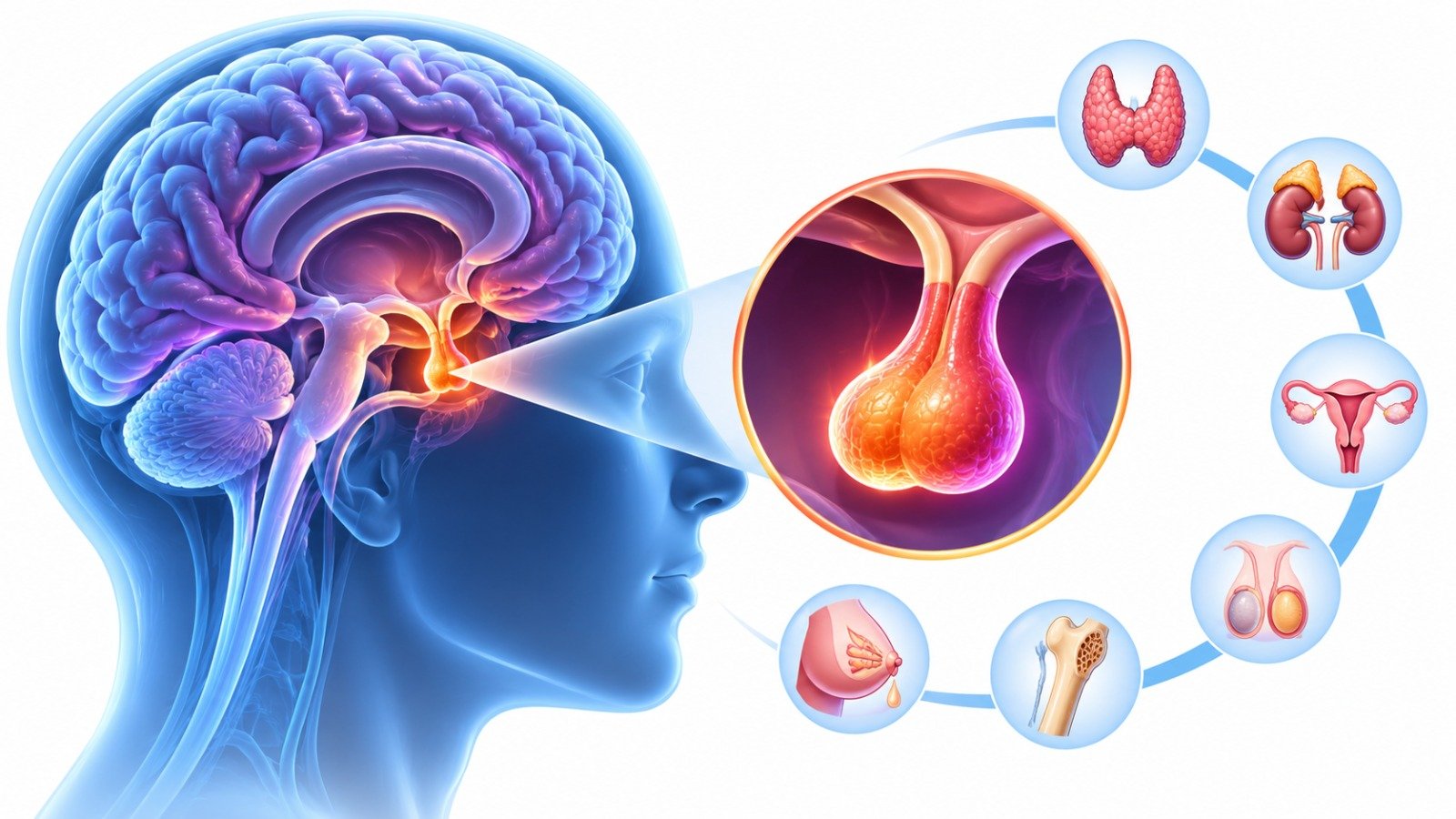
A Pea-Sized Gland That Directs Almost Every Hormone in Your Body
Tucked neatly in a bony pocket at the base of your brain sits the pituitary gland. Though no larger than a garden pea, it acts as the body’s hormonal “master conductor,” sending chemical instructions to your thyroid, adrenal glands, ovaries or testes, bones, and kidneys. When the pituitary makes too much hormone, too little hormone, or presses on nearby nerves, symptoms can appear across the entire body.
What Hormones Does the Pituitary Gland Control?
Working closely with the hypothalamus just above it, the pituitary regulates six major anterior hormones plus water-balance signaling from its posterior lobe:
| Pituitary Hormone | Target Organ / Role | Example of Excess vs. Deficiency |
|---|---|---|
| Prolactin | Breast milk production & ovulation regulation | Excess: missed periods, milk discharge, low testosterone |
| Growth Hormone (GH) | Childhood height, adult muscle, bone & metabolism | Excess: acromegaly / gigantism | Low: short stature in children |
| ACTH | Signals adrenal glands to make cortisol | Excess: Cushing’s disease | Low: secondary adrenal insufficiency |
| TSH | Drives thyroid hormone production | Low: central hypothyroidism (normal/low TSH with low Free T4) |
| LH & FSH | Puberty, menstrual cycles, sperm & testosterone | Low: delayed puberty, infertility, hypogonadism |
| ADH (Vasopressin) | Controls kidney water balance | Low: diabetes insipidus (excessive thirst & very dilute urine) |
Three Ways Pituitary Disorders Cause Symptoms
1. Too Much of One Hormone (Functioning Adenomas)
Most pituitary growths are benign (non-cancerous) pituitary adenomas. A prolactinoma is the most common type, causing irregular periods or infertility in women and low libido or erectile dysfunction in men. Less commonly, tumors overproduce growth hormone (gradually enlarging hands, feet, and jaw in acromegaly) or ACTH (causing central weight gain, diabetes, purple stretch marks, and high BP in Cushing’s disease).
2. Too Little Hormone (Hypopituitarism)
Pressure from a larger tumor, prior brain surgery or radiation, inflammation, or severe blood loss during childbirth (Sheehan’s syndrome) can damage pituitary cells. Symptoms are subtle at first—deep fatigue, dizziness, low blood pressure, unexplained weight loss, cold intolerance, or cessation of periods—and require lifelong targeted replacement of missing hormones.
3. Pressure on Neighboring Structures (Mass Effect)
Because the optic nerves cross directly above the pituitary gland, an enlarging pituitary tumor (>1 cm, called a macroadenoma) can press upward on the optic chiasm, causing persistent headaches and gradual loss of peripheral (side) vision.
Watch Out for “Pituitary Incidentalomas”
With MRI scans becoming widespread for migraines or sinus headaches, tiny harmless pituitary spots (under 1 cm) are often discovered by accident. Most small non-functioning incidentalomas never grow or cause harm—they simply need structured hormonal screening and follow-up imaging by an endocrinologist specializing in pituitary disorders, not panic or unnecessary surgery.
How Are Pituitary Disorders Diagnosed and Treated?
Accurate diagnosis combines targeted morning blood and dynamic hormone tests (such as IGF-1, morning cortisol, prolactin, Free T4, LH/FSH, and overnight suppression tests) with a dedicated pituitary MRI with contrast and formal visual field testing when tumors approach the optic nerves. Explore detailed clinical notes in our Endocrine Atlas pituitary overview.
Treatment is individualized by tumor type and hormone status:
- Medications first for prolactinomas: Dopamine agonists (like cabergoline) shrink most prolactinomas and normalize prolactin without surgery.
- Endoscopic transsphenoidal surgery: When surgery is needed (e.g., vision compression, acromegaly, or Cushing’s disease), experienced neurosurgeons reach the gland cleanly through the nasal passage with no external facial scar.
- Targeted hormone replacement: Missing adrenal, thyroid, sex, or growth hormones are replaced in physiologic doses—especially prioritizing cortisol safety during illness or surgery.
Urgent Red Flags: Pituitary Apoplexy
Sudden, severe “thunderclap” headache accompanied by abrupt blurred or double vision, drooping eyelid, or fainting requires emergency hospital evaluation—this rare event (pituitary apoplexy) occurs when sudden bleeding or swelling happens inside a pituitary tumor and needs urgent steroid protection and specialist care.
Frequently Asked Questions
Are pituitary tumors cancerous?
No. Over 99% of pituitary tumors are benign (non-cancerous) adenomas that do not spread to other organs. They require medical attention only if they overproduce hormones, press on surrounding structures like the optic nerves, or crowd out normal pituitary function.
Do all pituitary tumors require brain surgery?
Not at all. Prolactinomas usually shrink with oral tablets alone, and small non-functioning microadenomas often only need periodic MRI and hormone monitoring. When surgery is required, endoscopic transsphenoidal surgery works safely through the nasal passage.
Can you live a normal life with hypopituitarism?
Yes. With properly balanced replacement of missing cortisol, thyroid, and reproductive hormones—plus extra stress-dose steroid guidance during fever or surgery—patients lead active, full lives.
Bottom Line
Because the pituitary gland orchestrates thyroid, adrenal, growth, water, and reproductive hormones simultaneously, pituitary disorders can masquerade as everyday fatigue, infertility, or headaches for years. Most pituitary tumors are benign and highly treatable once properly mapped. If an MRI showed a pituitary finding or you have unexplained multiple hormone symptoms, consult our pituitary endocrinology team for coordinated diagnosis and long-term care.
Need Expert Endocrine Care?
Book a consultation with our specialist endocrinologists at Shashi Advanced Health Clinics, Bangalore.
Book Appointment on WhatsApp