
Diabetes and Kidney Health: Protecting Your Kidneys Early
Why Kidney Protection Starts Long Before You Feel Any Symptoms
Just like diabetic eye disease, diabetic kidney disease (diabetic nephropathy) develops quietly over years without pain, fever, or noticeable urination changes. By the time ankle swelling, foamy urine, or persistent fatigue appear, significant filtering capacity may already be lost. With early screening and today’s kidney-protective therapies, kidney decline can be dramatically slowed or prevented.
How Diabetes Strains the Kidneys
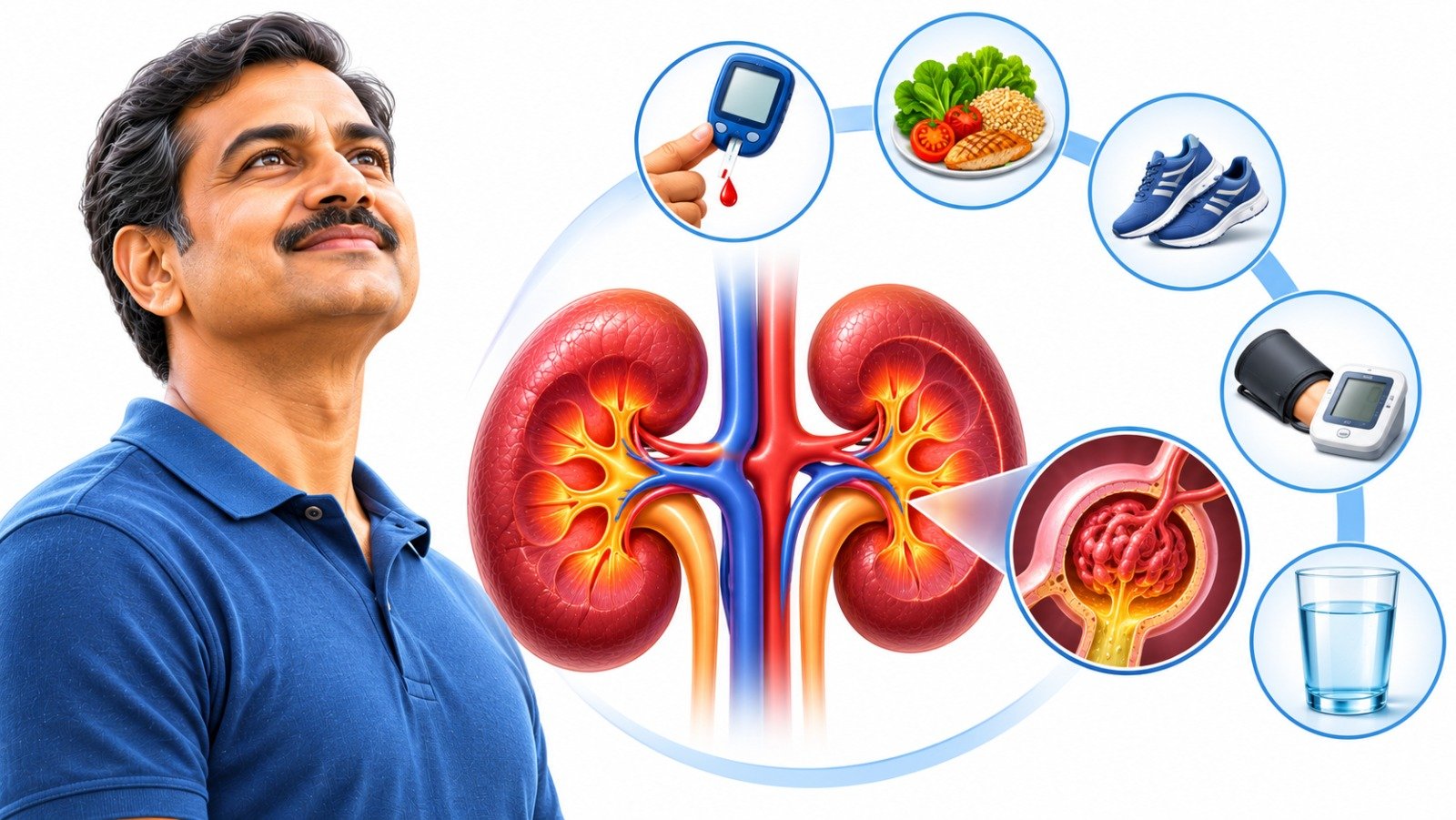
Each kidney contains roughly a million microscopic filtering units called glomeruli that clean waste from your blood while keeping helpful proteins inside the bloodstream.
When blood glucose and blood pressure stay elevated over time, the tiny blood vessels inside these filters become thickened and leaky. First, tiny amounts of protein (albumin) begin slipping into the urine—often years before blood creatinine moves out of the normal range. Read more in our Endocrine Atlas guide to diabetic kidney disease.
The Two Annual Kidney Tests Every Person With Diabetes Needs
Many patients only check serum creatinine during annual labs. While creatinine is essential, checking both a blood test and a urine test catches kidney stress years earlier:
| Test | What It Measures | Key Thresholds |
|---|---|---|
| 1. Urine Albumin-to-Creatinine Ratio (uACR) | Checks if microscopic albumin protein is leaking into urine—the earliest warning sign. | Normal: < 30 mg/g Moderately increased: 30–300 mg/g Severely increased: > 300 mg/g |
| 2. Blood Creatinine & eGFR | Estimates overall kidney filtering rate (mL/min/1.73m²) based on creatinine, age, and sex. | Normal/mild: ≥ 60 (if no protein leak) Needs close monitoring/adjustment: < 60 |
Testing frequency: At least once a year from diagnosis in Type 2 diabetes, and starting 5 years after diagnosis in Type 1 diabetes (more often if either test is abnormal).
Myth Busting: “Do Diabetes Tablets or Insulin Damage the Kidneys?”
A common fear among patients is that starting diabetes pills or insulin harms the kidneys. In truth, high blood sugar and uncontrolled blood pressure cause diabetic kidney damage—not insulin.
What does change when kidney function declines is how long medicines stay active in the bloodstream. Reduced kidney clearance can make sulfonylureas or excess basal insulin linger longer, raising hypoglycemia risk (learn about over-basalization and kidney clearance). Reviewing doses regularly with your endocrinologist keeps both your kidneys and blood sugar safe.
Proven Steps to Protect Your Kidneys Early
1. Keep Blood Sugar and Blood Pressure in Target
Controlling HbA1c and maintaining blood pressure typically below 130/80 mmHg (individualized to age and tolerance) drastically lowers glomerular stress.
2. Ask About Modern Kidney-Protective Medications
Today’s diabetes care goes far beyond sugar lowering alone. Depending on your eGFR and uACR, your endocrinologist may recommend evidence-based organ-protective therapies such as ACE inhibitors or ARBs, SGLT2 inhibitors, non-steroidal mineralocorticoid receptor antagonists (finerenone), or selected GLP-1 receptor agonists proven to slow kidney disease progression.
3. Avoid Over-the-Counter Kidney Traps
Frequent self-medication with painkillers (NSAIDs like ibuprofen, diclofenac, or aceclofenac for joint/back aches) and unregulated herbal or heavy-metal powders is a major avoidable cause of sudden kidney injury in India.
4. Follow Practical Kidney-Friendly Eating
Cut excess dietary salt (pickles, papads, packaged namkeen, extra table salt), stay comfortably hydrated unless fluid-restricted, avoid high-dose protein supplements without medical advice, and stop smoking completely.
Quick Kidney Protection Checklist
| Do | Don’t |
|---|---|
|
✔ Get both urine uACR and blood eGFR checked every year ✔ Monitor home blood pressure regularly ✔ Discuss SGLT2 inhibitors / ACEi or ARBs if uACR is elevated ✔ Reduce hidden salt in pickles, chips, and restaurant food ✔ Tell your doctor if ankle swelling or persistent fatigue starts |
✘ Assume normal creatinine means urine uACR isn’t needed ✘ Take frequent NSAID painkillers without checking kidney safety ✘ Use unverified herbal “diabetes cures” ✘ Stop kidney-protective BP pills just because readings look fine |
Bottom Line
Diabetic kidney disease is quiet in its earliest—and most treatable—stage. A simple annual urine uACR alongside serum creatinine/eGFR, good blood pressure and glucose management, avoiding risky painkillers, and modern kidney-protective medicines can preserve your kidney function for decades. Schedule your annual kidney screening with our endocrinology team and protect your kidneys early.
Need Expert Endocrine Care?
Book a consultation with our specialist endocrinologists at Shashi Advanced Health Clinics, Bangalore.
Book Appointment on WhatsApp